Choosing the right contractor for a commercial roofing project requires more than comparing prices. If you’re evaluating Commercial Roofing Contractors in Plano, you should look closely at experience, insurance, roofing systems, inspection practices, warranties, communication, and the contractor’s ability to work safely around an active business property.
Plano commercial buildings face intense summer heat, severe thunderstorms, hail, high winds, and heavy rain. The contractor you choose should understand North Texas weather and know how to recommend roofing solutions that fit the specific needs of your property. This guide explains what business owners and property managers should review before hiring a commercial roofer.
Why Vetting a Commercial Roofing Contractor Matters
Commercial roofing projects can involve significant costs, operational disruptions, and long-term maintenance responsibilities.
The right contractor can help you:
- Reduce the risk of installation problems
- Protect your building from water intrusion
- Select an appropriate roofing system
- Plan around business operations
- Improve long-term roof performance
- Understand warranty requirements
- Develop a practical maintenance strategy
A contractor should be able to explain not only what work is recommended, but why it makes sense for your property.
Look for Commercial Roofing Experience
Residential and commercial roofing require different skills.
When comparing Commercial Roofing Contractors in Plano, ask how much experience the company has with commercial and low-slope roofing systems.
A qualified contractor should understand roofing systems commonly used on:
- Office buildings
- Warehouses
- Retail centers
- Restaurants
- Medical facilities
- Industrial buildings
- Multi-family properties
- Mixed-use developments
Experience with buildings similar to yours can be especially valuable when the property includes rooftop equipment, drains, parapet walls, skylights, or multiple roof penetrations.
Ask Which Roofing Systems They Install
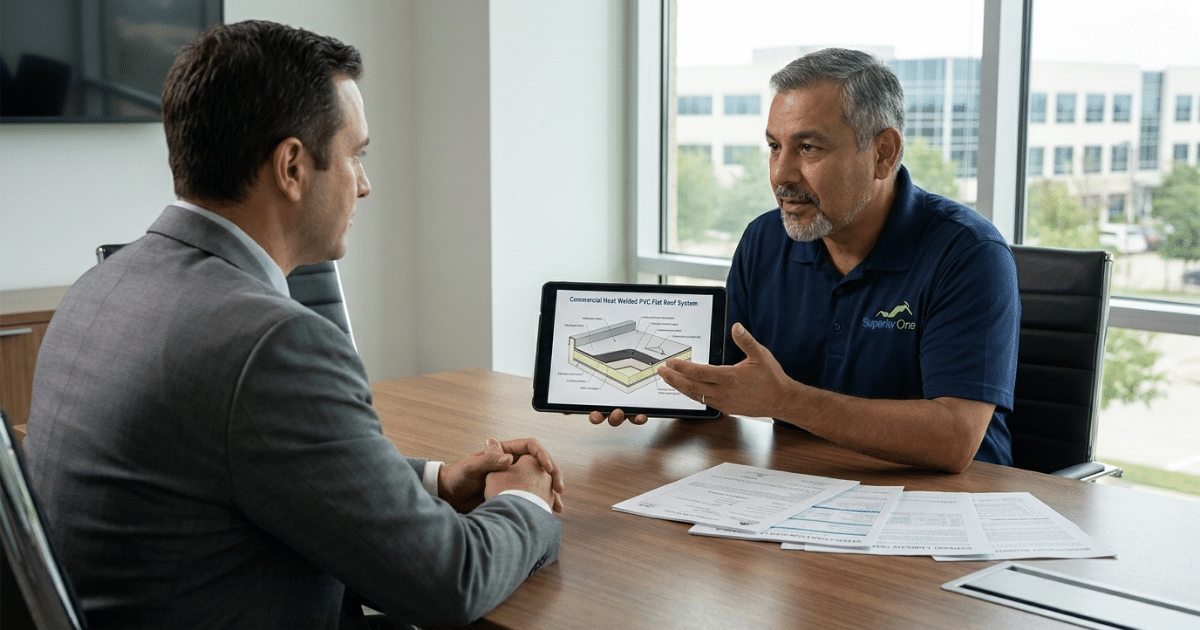
Commercial contractors may specialize in different materials.
Ask whether the company works with systems such as:
- TPO roofing
- PVC roofing
- Modified bitumen
- Built-up roofing
- Single-ply membranes
- Flat and low-slope roofing systems
The contractor should be able to explain the advantages and limitations of each option rather than recommending the same product for every building.
Verify Insurance and Business Credentials
Before signing a contract, verify that the roofing company operates professionally and carries appropriate insurance.
Ask for documentation of:
- General liability insurance
- Workers’ compensation coverage, when applicable
- Relevant business credentials
- Manufacturer certifications, when applicable
Commercial roofing projects involve crews, equipment, materials, and significant rooftop activity, so proper coverage is an important part of reducing risk.
Ask About Manufacturer Certifications
Manufacturer certifications can provide additional insight into a contractor’s training and experience with specific commercial roofing systems.
Depending on the manufacturer and product, certification programs may involve:
- Installation training
- Product knowledge
- Quality requirements
- Access to certain warranty options
If a contractor recommends a particular membrane system, ask whether the company is approved or certified by the manufacturer and what that means for your project.
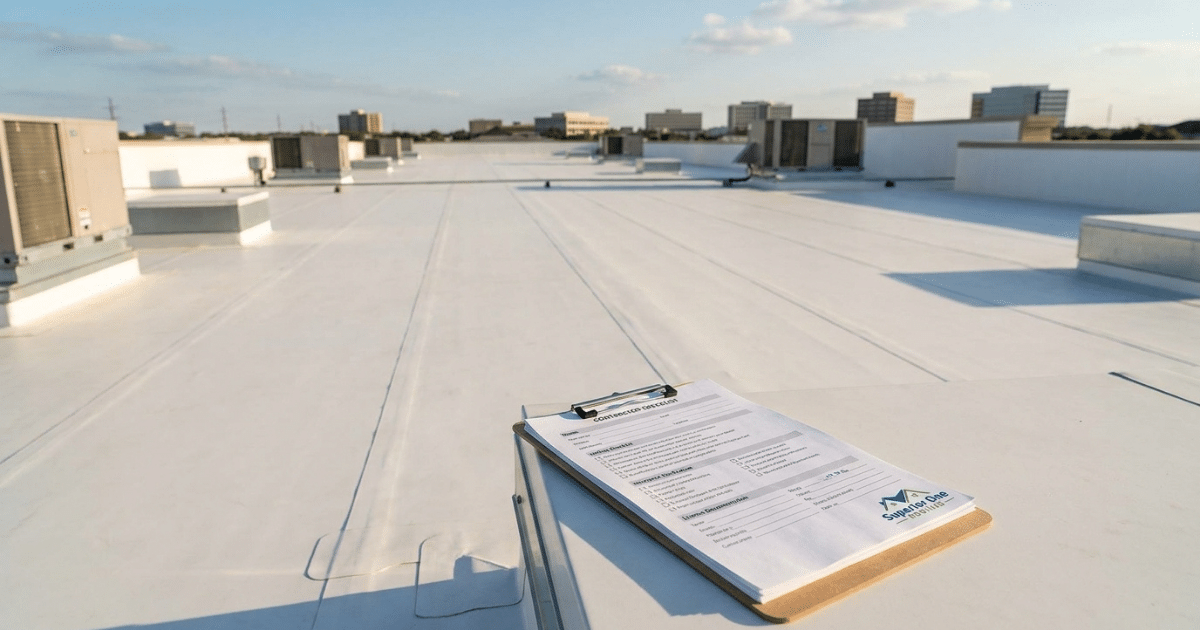
Request a Detailed Roof Inspection
A commercial roofing recommendation should begin with a thorough evaluation.
A professional inspection may include:
- Roofing membrane condition
- Seams
- Flashing
- Roof penetrations
- Drainage systems
- Ponding water
- Roof edges
- Rooftop equipment areas
- Visible storm damage
- Signs of moisture intrusion
The contractor should document findings and explain whether repair, maintenance, restoration, or replacement is the most appropriate option.
Ask How They Identify Hidden Moisture
Commercial roof damage is not always visible at the surface.
Moisture may become trapped beneath the roofing membrane or insulation.
Ask the contractor how they evaluate suspected moisture and whether additional testing may be appropriate for your building.
Identifying wet areas before a major roofing project can help prevent unnecessary work and improve the accuracy of the proposed scope.
Review the Written Estimate Carefully
A commercial roofing proposal should provide enough detail for you to understand exactly what you’re purchasing.
Look for information about:
- Roofing system
- Scope of work
- Material specifications
- Insulation
- Flashing
- Roof penetrations
- Drainage work
- Tear-off requirements
- Labor
- Cleanup
- Project schedule
- Warranty information
- Payment terms
Detailed proposals make it easier to compare contractors fairly.
A significantly lower estimate may exclude work that another contractor has included, so compare the complete scope rather than the total price alone.
Ask How They Handle Drainage
Drainage is especially important on flat and low-slope commercial roofs.
Ask how the contractor will evaluate:
- Roof drains
- Scuppers
- Gutters
- Downspouts
- Ponding water
- Low areas
A new membrane alone may not solve existing drainage problems.
The contractor should identify drainage concerns before installation so they can be addressed as part of the roofing strategy.
Evaluate Their Storm Damage Experience
Plano and the greater Dallas-Fort Worth area can experience severe thunderstorms, hail, and high winds.
Ask whether the contractor regularly works with:
- Hail-damaged commercial roofs
- Wind damage
- Membrane punctures
- Flashing failures
- Roof leaks
- Emergency protection
- Storm-related inspections
Storm damage can affect roofing membranes, metal components, rooftop equipment, flashing, and drainage systems.
A contractor familiar with North Texas weather should know where to look for common problems.
Ask About Insurance Documentation
If storm damage may involve an insurance claim, ask what documentation the contractor can provide.
A commercial roofer may assist by providing:
- Inspection photographs
- Damage documentation
- Repair estimates
- Roof condition reports
- Proposed scopes of work
Your insurance carrier determines coverage under your specific policy, so the roofing contractor should focus on documenting roof conditions rather than promising claim outcomes.
Review Warranty Options
Commercial roofing warranties can vary considerably.
Ask about both:
Manufacturer Warranties
These may cover qualifying roofing materials or systems according to the manufacturer’s terms.
Contractor Workmanship Warranties
These address installation-related issues covered by the roofing company.
Before choosing a contractor, ask:
- How long does the warranty last?
- What components are covered?
- Who performs warranty repairs?
- Are inspections or maintenance required?
- Does the warranty need to be registered?
- Are there exclusions you should understand?
The contractor should be willing to explain these terms clearly.
Ask About Preventative Maintenance
A good commercial roofing contractor should think beyond the initial project.
Ask whether the company provides ongoing maintenance and inspection services.
Preventative maintenance may include:
- Membrane inspections
- Seam checks
- Flashing evaluations
- Drain cleaning
- Debris removal
- Sealant checks
- Inspection of roof penetrations
- Documentation of developing issues
Regular maintenance can help identify small problems before they become expensive leaks or emergency repairs.
Find Out Who Will Manage the Project
Commercial roofing projects often involve more coordination than residential work.
Ask who will serve as your primary contact.
You should know:
- Who manages the roofing crew
- Who provides project updates
- Who coordinates access
- Who handles unexpected conditions
- Who communicates schedule changes
Clear project management is especially important when roofing work takes place while employees, customers, tenants, or vendors are using the property.
Ask How They Will Minimize Business Disruption
Commercial roofing work can create noise, equipment movement, temporary closures, and access concerns.
Ask how the contractor plans to manage:
- Customer entrances
- Employee parking
- Delivery areas
- Loading zones
- Roofing debris
- Equipment placement
- Work hours
- Rooftop HVAC access
A contractor experienced with active commercial properties should be able to develop a plan that helps minimize disruption.
Review Their Safety Procedures
Commercial roofing involves fall risks, heavy materials, equipment, and work around occupied properties.
Ask how the contractor manages jobsite safety.
Topics may include:
- Fall protection
- Equipment placement
- Restricted areas
- Debris management
- Worker training
- Daily site cleanup
Professional safety practices protect workers, building occupants, and your property.
Check Reviews and References
Before making a final decision, look for evidence of completed commercial projects.
Ask for:
- Commercial references
- Recent local projects
- Online reviews
- Examples of similar roofing systems
When reviewing feedback, look for patterns involving:
- Communication
- Workmanship
- Scheduling
- Cleanup
- Professionalism
- Problem resolution
- Warranty support
A contractor’s reputation can provide valuable insight into what you can expect during your own project.
Be Cautious of Red Flags
Some warning signs should make property owners cautious.
Potential red flags include:
- Pressure to sign immediately
- Vague estimates
- Unclear warranty terms
- No proof of insurance
- No commercial references
- Large unexplained upfront payments
- Recommendations without a roof inspection
- Promises about guaranteed insurance claim outcomes
- Poor communication
A reputable contractor should be transparent and willing to answer your questions.
Why Local Plano Experience Matters
Commercial roofs in Plano face demanding North Texas conditions.
A local contractor understands:
- Extreme summer heat
- Strong UV exposure
- Severe thunderstorms
- Hail
- High winds
- Heavy rainfall
- Common commercial roof systems
- Applicable local building requirements
Local experience can help contractors recommend materials, maintenance strategies, and repairs suited to the conditions your building regularly faces.
Why Plano Businesses Choose Superior One Roofing & Construction
Businesses evaluating Commercial Roofing Contractors in Plano choose Superior One Roofing & Construction for experienced workmanship, detailed inspections, and practical roofing solutions designed for North Texas properties.
Our commercial roofing services include:
- Commercial roof inspections
- TPO roofing
- PVC roofing
- Modified bitumen roofing
- Built-up roofing
- Flat roof repair
- Roof leak repair
- Storm damage restoration
- Preventative maintenance
- Commercial roof replacement
- New commercial roofing installation
- Honest recommendations
- Transparent estimates
Our goal is to help business owners and property managers understand the condition of their roofing system and choose a solution that supports long-term building performance.
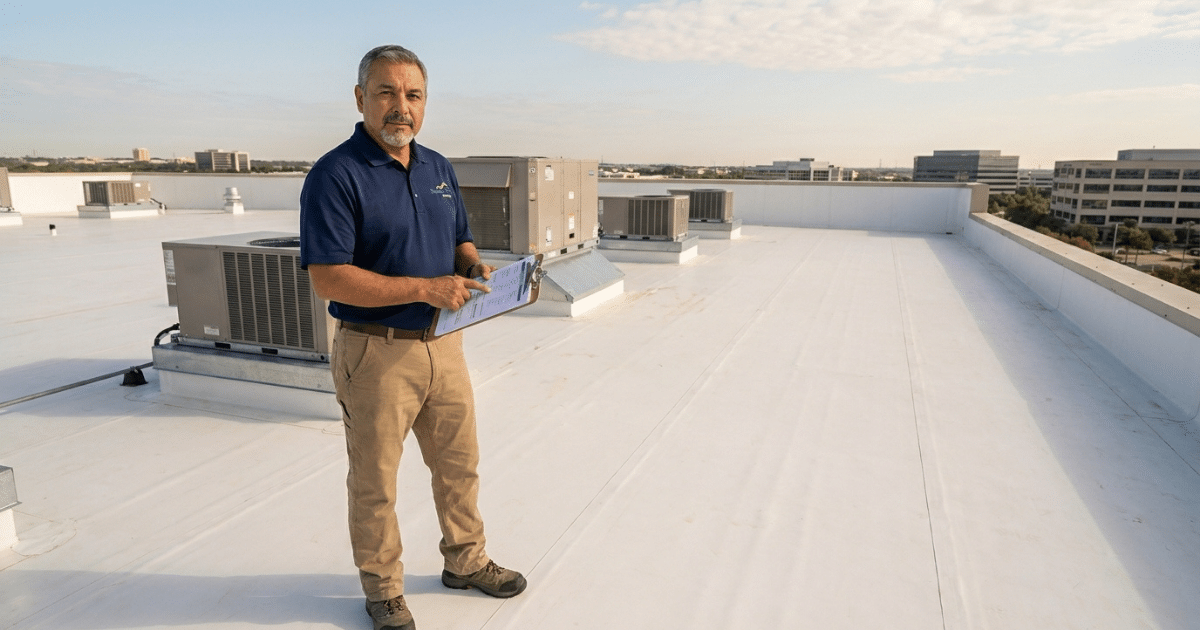
Proudly Serving Plano and Surrounding Communities
Superior One Roofing & Construction proudly serves businesses throughout Plano and surrounding North Texas communities.
Our commercial roofing team works with properties in Frisco, Allen, McKinney, Richardson, Carrollton, The Colony, Addison, Dallas, Garland, Lewisville, Farmers Branch, and nearby communities throughout the Dallas-Fort Worth area.
Whether your building needs maintenance, leak repairs, storm restoration, or a complete commercial roof replacement, our team is ready to evaluate the property and recommend the appropriate next step.
Frequently Asked Questions
What should I look for when comparing Commercial Roofing Contractors in Plano?
Look for commercial roofing experience, appropriate insurance, detailed inspections, transparent proposals, experience with your roofing system, clear warranties, strong references, and professional project management.
Should I choose the lowest commercial roofing bid?
Not automatically. Compare materials, insulation, flashing, drainage, warranties, tear-off requirements, and the complete scope of work. A lower proposal may not include the same services as a more comprehensive estimate.
What commercial roofing systems should a contractor know how to install?
Depending on your building, a qualified contractor may work with TPO, PVC, modified bitumen, built-up roofing, and other flat or low-slope systems.
How often should a commercial roof be inspected?
Many property owners schedule inspections at least twice each year and after major hail, wind, or severe weather events. The appropriate schedule may vary based on roof age, system type, condition, and building use.
Can a contractor help document storm damage for an insurance claim?
Yes. A roofing contractor can document the physical condition of the roof with photographs, inspection findings, and repair estimates. Your insurance company determines coverage under your policy.
Ready to Compare Commercial Roofing Contractors in Plano?
Choosing a commercial roofer should be based on experience, workmanship, communication, safety, and long-term value, not price alone.
If you’re evaluating Commercial Roofing Contractors in Plano, Superior One Roofing & Construction can provide a professional commercial roof inspection and clear recommendations based on the condition of your property.
Contact Superior One Roofing & Construction today to schedule your commercial roof inspection and learn more about repair, maintenance, storm restoration, and replacement options for your North Texas property.
