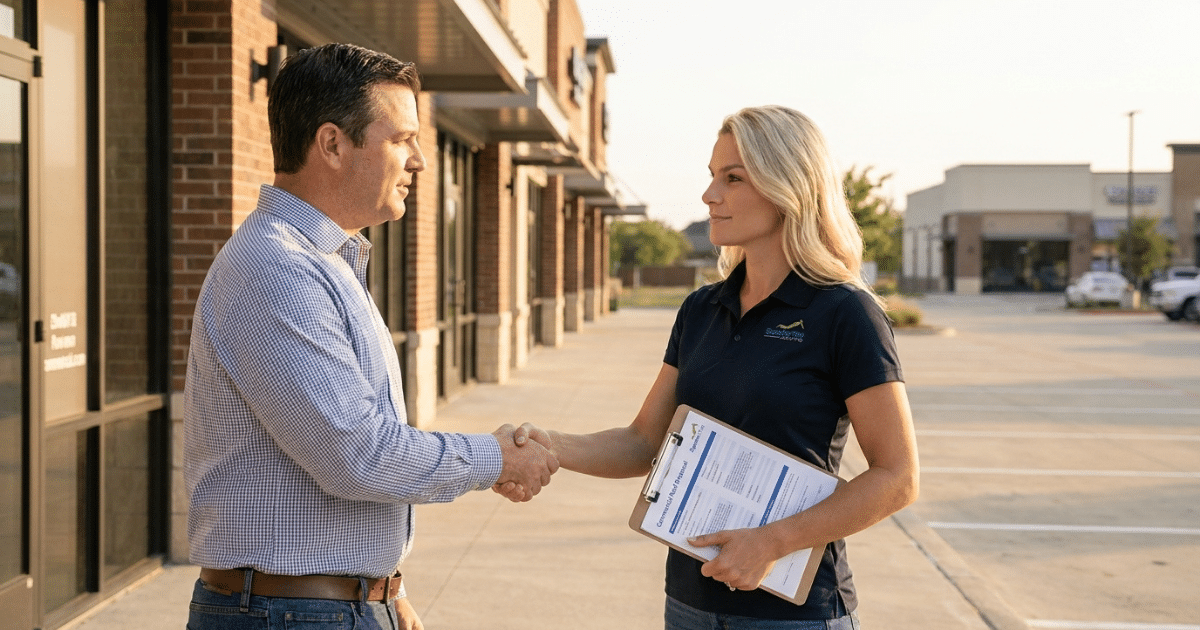
A commercial roof protects far more than the building itself. It helps protect employees, customers, inventory, equipment, and day-to-day operations. If you’re researching Commercial Roofing Services in Fort Worth, the most important things to understand are which roofing systems are available, how often your roof should be inspected, what warning signs to watch for, and when repair or replacement makes the most sense.
Fort Worth commercial properties face intense summer heat, strong UV exposure, hail, severe thunderstorms, high winds, and heavy rain. Choosing the right roofing system and maintaining it properly can help reduce unexpected repairs, extend service life, and protect your investment.
What Do Commercial Roofing Services Include?
Commercial roofing covers a wide range of services designed to protect flat and low-slope buildings.
Depending on the property, Commercial Roofing Services in Fort Worth may include:
- Commercial roof inspections
- Roof leak detection
- Commercial roof repair
- Preventative maintenance
- Storm damage repair
- Emergency roofing service
- Commercial roof replacement
- New roof installation
- Flat roof repair
- TPO roofing
- PVC roofing
- Modified bitumen roofing
- Built-up roofing
The right service depends on the age, material, condition, and overall performance of the existing roof.
Why Commercial Roofs Require Specialized Experience
Commercial roofing systems are different from most residential roofs.
Many commercial buildings use flat or low-slope systems that require specialized installation methods, drainage planning, flashing details, and membrane systems.
Commercial properties may also include:
- HVAC equipment
- Roof drains
- Parapet walls
- Skylights
- Exhaust systems
- Large roof penetrations
- Mechanical equipment
These features can create additional areas where water intrusion may occur if the roofing system is not properly installed or maintained.
Common Commercial Roofing Systems in Fort Worth
Choosing the right roofing system is one of the most important decisions a building owner can make.
TPO Roofing
TPO is a popular single-ply roofing membrane used on many commercial buildings.
Potential benefits include:
- Reflective surface
- Strong UV resistance
- Heat-welded seams
- Flexible installation options
- Energy-efficiency potential
- Straightforward maintenance
TPO is commonly used on warehouses, retail centers, office buildings, and other low-slope commercial properties.
PVC Roofing
PVC is another single-ply roofing membrane known for durability and chemical resistance.
It may be especially useful for:
- Restaurants
- Commercial kitchens
- Manufacturing facilities
- Properties exposed to oils or chemicals
PVC systems also use heat-welded seams to create a continuous waterproof barrier.
Modified Bitumen Roofing
Modified bitumen is a multi-layer roofing system commonly used on low-slope commercial buildings.
Benefits may include:
- Durable construction
- Strong waterproofing
- Flexibility
- Reliable performance
- Multiple installation options
It can be a good fit for properties that benefit from a layered roofing assembly.
Built-Up Roofing
Built-up roofing, often called BUR, uses multiple layers of roofing materials to create a durable waterproof system.
It has been used on commercial properties for decades and may provide:
- Multiple layers of protection
- Strong waterproofing
- Reliable performance
- Durable surface protection
The best system for your building depends on factors such as roof design, drainage, budget, energy goals, and anticipated rooftop activity.
How Fort Worth Weather Affects Commercial Roofs
North Texas weather can place significant stress on commercial roofing systems.
Fort Worth businesses may experience:
- Extreme summer heat
- Intense UV exposure
- Hail
- Severe thunderstorms
- Strong winds
- Heavy rainfall
- Rapid temperature changes
Heat can cause roofing materials to expand, while cooler temperatures cause them to contract. Over time, repeated movement can contribute to seam stress, flashing problems, and membrane deterioration.
Hail and high winds can also damage commercial roofing materials, rooftop equipment, and drainage components.
Signs Your Commercial Roof Needs Repair
Commercial roofing problems are often easier and less expensive to address when identified early.
Watch for:
- Interior water stains
- Active roof leaks
- Ponding water
- Damaged flashing
- Loose membrane seams
- Blistering or bubbling
- Cracks or punctures
- Damaged roof penetrations
- Wet insulation
- Unexplained increases in energy use
If you notice any of these issues, scheduling an inspection can help determine the source and extent of the problem.
Why Ponding Water Should Not Be Ignored
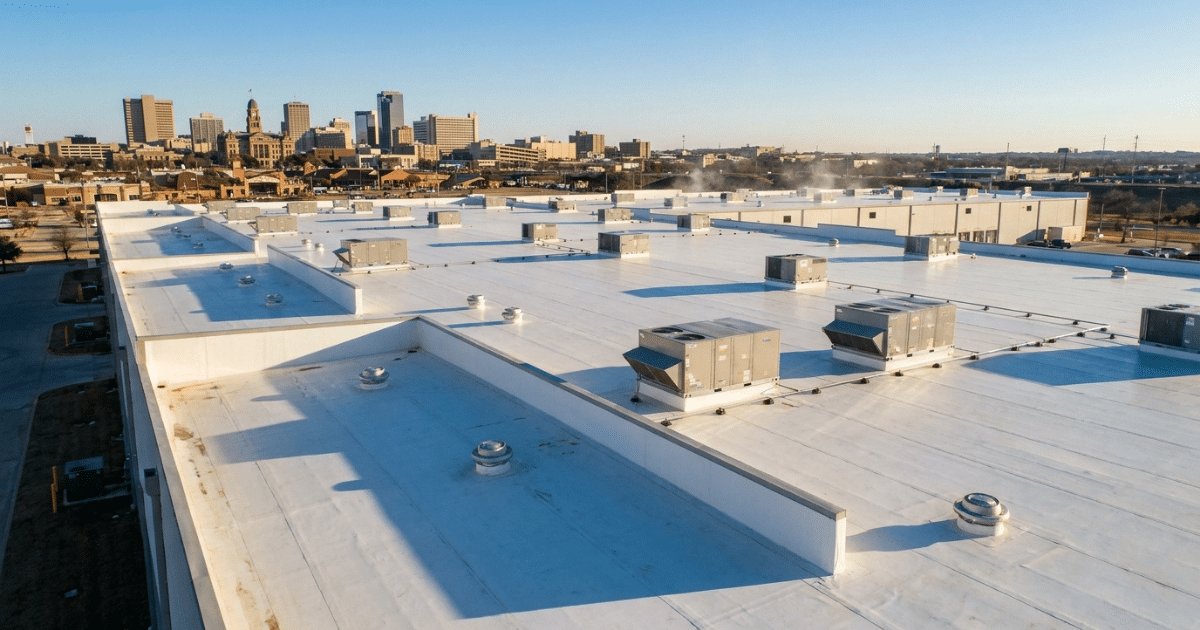
Flat roofs are designed with drainage systems that move water away from the building.
If water remains on the roof for extended periods, it may indicate:
- Clogged drains
- Improper drainage
- Low areas in the roof surface
- Structural movement
- Installation problems
Standing water can place additional stress on roofing materials and increase the risk of leaks.
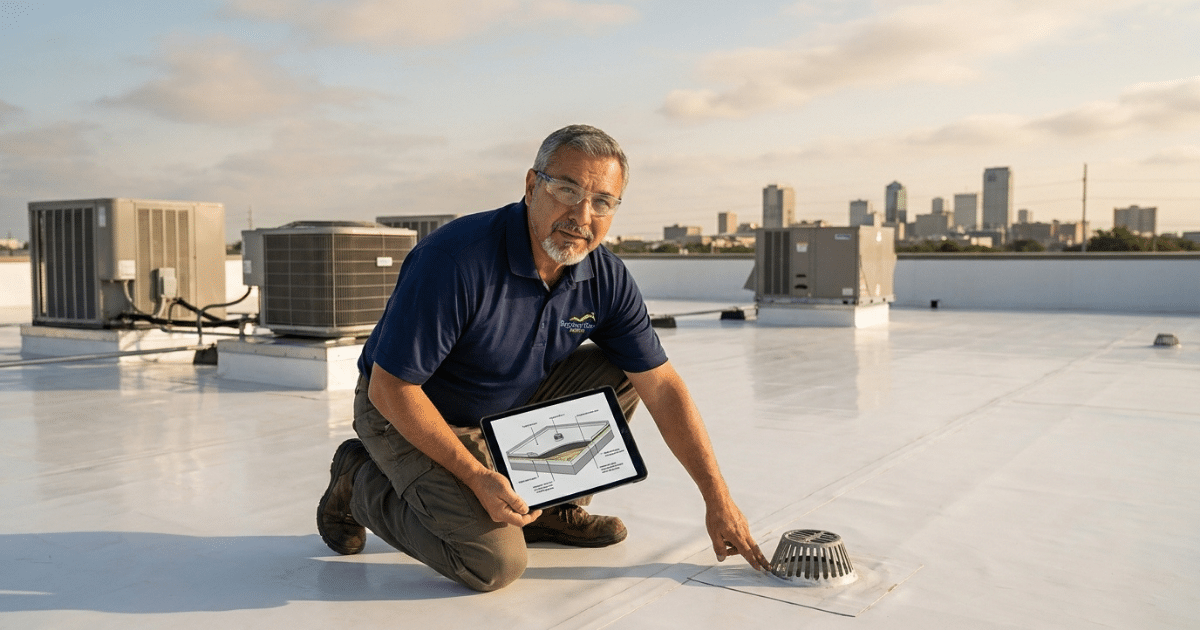
A commercial roofing professional can evaluate the drainage system and determine whether repairs or corrective work are needed.
How Often Should a Commercial Roof Be Inspected?
Regular inspections are an important part of commercial roof maintenance.
Many property owners schedule professional inspections at least twice a year, often in the spring and fall.
Additional inspections may be helpful after:
- Hailstorms
- Severe thunderstorms
- High-wind events
- Heavy rainfall
- Nearby construction activity
- Rooftop mechanical work
Routine inspections can help identify small problems before they become expensive disruptions.
Preventative Maintenance Can Extend Roof Performance
Preventative maintenance is one of the most effective ways to protect a commercial roof.
A maintenance program may include:
- Inspecting membrane seams
- Checking flashing
- Clearing drains
- Inspecting roof penetrations
- Removing debris
- Checking for punctures
- Evaluating sealants
- Identifying areas of ponding water
Catching problems early can reduce the likelihood of emergency repairs and help extend the useful life of the roofing system.
Commercial Roof Repair vs. Replacement
Not every commercial roofing problem requires a complete replacement.
Repair may be appropriate when:
- Damage is localized
- The membrane is generally in good condition
- Leaks have a clear source
- Most of the roof remains functional
- The system has significant useful life remaining
Replacement may make more sense when:
- Leaks are widespread
- Repairs are becoming frequent
- The roofing system is severely deteriorated
- Moisture has affected large areas
- Storm damage is extensive
- The roof is approaching the end of its service life
A professional inspection can help business owners compare the cost and long-term value of both options.
Why Commercial Roof Leaks Should Be Addressed Quickly
A commercial roof leak can disrupt business operations and damage more than roofing materials.
Water intrusion may affect:
- Inventory
- Office equipment
- Electrical systems
- Insulation
- Ceilings
- Interior walls
- Flooring
- Tenant spaces
Prompt Commercial Roofing Services in Fort Worth can help identify the source of a leak before the damage spreads.
What to Do After Storm Damage
After severe weather, inspect your property from the ground and look for obvious signs of damage.
You may notice:
- Roofing debris
- Damaged rooftop equipment
- Leaks
- Hail impacts
- Loose flashing
- Damaged gutters
- Interior water stains
Avoid climbing onto a wet or damaged commercial roof.
Instead, schedule a professional inspection and document visible damage with photos or video when it is safe to do so.
If the damage may involve an insurance claim, your insurance carrier will determine coverage based on the specific terms of your policy.
What Should a Commercial Roofing Estimate Include?
A professional estimate should provide a clear description of the proposed work.
Depending on the project, it may include:
- Roofing system
- Scope of repairs or replacement
- Materials
- Labor
- Existing roof removal if needed
- Insulation work
- Flashing
- Drainage components
- Project timeline
- Cleanup
- Warranty information
A detailed estimate helps property owners compare contractors based on the complete scope rather than price alone.
Questions to Ask a Commercial Roofing Contractor
Before hiring a contractor, ask questions such as:
- What commercial roofing systems do you specialize in?
- Do you have experience with buildings like mine?
- What does your inspection include?
- How do you identify hidden moisture?
- What repair options are available?
- When would you recommend replacement?
- What warranties are available?
- How will the project affect business operations?
- How do you handle unexpected roof conditions?
Clear answers can help you determine whether the contractor understands the needs of your property.
Why Local Fort Worth Experience Matters
Commercial buildings in Fort Worth face roofing challenges shaped by the North Texas climate.
A local contractor understands:
- Hail damage
- Severe thunderstorms
- High winds
- Extreme summer temperatures
- Common commercial roofing systems
- Applicable local building requirements
- Typical drainage and storm-related concerns
This local experience can be especially valuable when selecting materials and developing a maintenance plan.
Why Fort Worth Businesses Choose Superior One Roofing & Construction
Businesses searching for Commercial Roofing Services in Fort Worth choose Superior One Roofing & Construction for experienced workmanship, clear communication, and roofing solutions designed for North Texas properties.
Our commercial roofing services include:
- Commercial roof inspections
- Roof leak repair
- Flat roof repair
- Storm damage restoration
- Preventative maintenance
- TPO roofing
- PVC roofing
- Modified bitumen roofing
- Built-up roofing
- Commercial roof replacement
- New commercial roof installation
- Honest recommendations
- Transparent estimates
Our goal is to help property owners protect their buildings with roofing solutions tailored to the condition and needs of each property.
Proudly Serving Fort Worth and Surrounding Communities
Superior One Roofing & Construction proudly provides commercial roofing services throughout Fort Worth, Tarrant County, and surrounding North Texas communities.
Our team serves businesses in Arlington, North Richland Hills, Keller, Southlake, Grapevine, Colleyville, Bedford, Euless, Hurst, Burleson, Benbrook, White Settlement, Saginaw, Haslet, Lake Worth, Crowley, Mansfield, Weatherford, Aledo, Haltom City, River Oaks, and surrounding areas.
Whether you own a warehouse, office building, retail center, restaurant, industrial facility, or multi-family property, our team is ready to evaluate your roofing system and recommend the appropriate solution.
Frequently Asked Questions
What types of Commercial Roofing Services in Fort Worth are available?
Services may include inspections, leak repair, preventative maintenance, storm damage repair, roof replacement, new installation, and work on TPO, PVC, modified bitumen, and built-up roofing systems.
How often should a commercial roof be inspected?
Many commercial property owners schedule inspections twice a year and after major storms. The ideal schedule depends on the roofing system, age, condition, and building use.
Can a leaking commercial roof be repaired?
Often, yes. Localized leaks caused by damaged seams, flashing, penetrations, or punctures may be repairable. Widespread deterioration may make replacement more practical.
What causes ponding water on commercial roofs?
Common causes include clogged drains, inadequate drainage, low areas in the roof surface, or structural movement. A professional inspection can identify the underlying cause.
How do I know whether my commercial roof needs replacement?
Frequent leaks, widespread membrane damage, recurring repairs, extensive moisture intrusion, and an aging roofing system may indicate that replacement should be considered.
Protect Your Fort Worth Commercial Property
A dependable commercial roof helps protect your property, people, equipment, and business operations.
Superior One Roofing & Construction provides Commercial Roofing Services in Fort Worth for businesses that need inspections, repairs, maintenance, storm restoration, or complete roof replacement.
Contact Superior One Roofing & Construction today to schedule a commercial roof inspection and get a clear recommendation for protecting your North Texas property.
