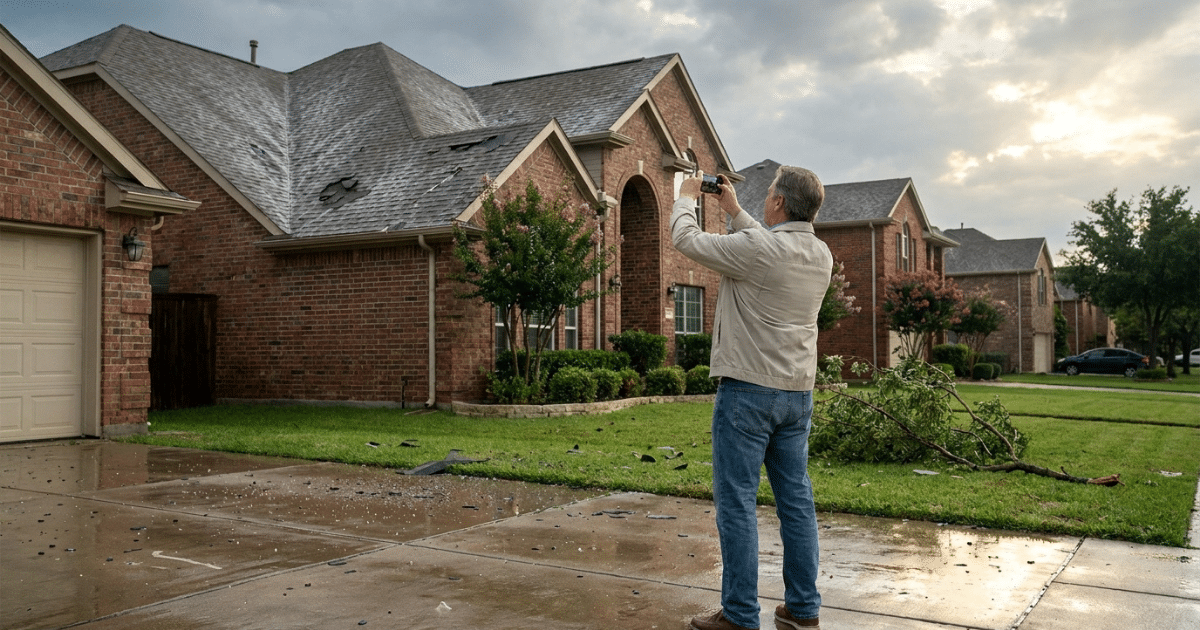
When a severe storm moves through North Texas, your roof is often the first part of your home to take the impact. Hail, strong winds, falling tree limbs, and heavy rain can all cause damage that isn’t immediately visible from the ground. If you need storm damage roof repair in Dallas, documenting the damage properly can make a significant difference in how smoothly your insurance claim is handled.
The key is to act quickly, stay organized, and avoid common mistakes that could delay your claim. In this guide, we’ll explain exactly what to document after a storm, when to contact a roofing contractor, and how professional inspections can help support a faster, more accurate insurance claim.
Why Documentation Matters After Storm Damage
Insurance companies rely on documentation to determine the extent of your storm damage and whether repairs or roof replacement are covered under your policy.
The more complete your documentation is, the easier it is for the insurance adjuster to understand what happened and evaluate your claim. Good records also help reduce disputes over the cause or extent of the damage. Texas homeowners are encouraged to document damage, take photos before repairs, and keep records throughout the claims process.
Even if your roof appears undamaged from the ground, hidden damage from hail or high winds can worsen over time if left unaddressed.
Common Types of Storm Damage in Dallas
North Texas experiences some of the country’s most unpredictable weather.
Storms commonly cause:
- Hail damage to shingles and metal roofing
- Missing or lifted shingles
- Wind damage to flashing and ridge caps
- Fallen tree limbs
- Damaged gutters and downspouts
- Water intrusion and roof leaks
- Debris impact damage
After any significant storm, scheduling a professional roof inspection is one of the best ways to identify damage before it leads to larger problems.
What to Document Immediately After the Storm
Once it’s safe to go outside, begin documenting everything you can safely observe.
Take Wide Photos of Your Property
Start with photos that show the overall condition of your home.
Capture images of:
- The front, back, and sides of your home
- Your roof from multiple angles
- Detached structures
- Fences
- Trees
- Driveways
- Landscaping
These photos establish the overall impact of the storm.
Photograph Close-Up Damage
Next, take detailed photos of any visible damage.
Examples include:
- Missing shingles
- Lifted shingles
- Cracked roof tiles
- Bent flashing
- Damaged gutters
- Broken windows
- Dented vents
- Fallen branches
Use multiple angles whenever possible.
Document Interior Damage
Roof damage isn’t always visible outside.
Take photographs of:
- Ceiling stains
- Water leaks
- Wet insulation
- Peeling paint
- Damaged drywall
- Mold growth if present
Interior photos help demonstrate how roof damage affected your home.
Record the Date of the Storm
Write down:
- Date
- Approximate time
- Weather conditions
- Size of hail, if applicable
- Wind conditions
- Any weather alerts issued for your area
Keeping this information with your photos creates a clear timeline for your insurance company.

Save Every Receipt
If emergency measures are necessary to prevent additional damage, save every receipt.
This may include:
- Emergency tarping
- Temporary roof repairs
- Water extraction
- Debris removal
- Hotel stays if your home becomes temporarily uninhabitable
Insurance policies often require homeowners to take reasonable steps to prevent additional damage, and documented temporary repairs may be reimbursable. Keep all receipts and avoid permanent repairs until your insurer has had the opportunity to inspect the damage.
Schedule a Professional Roof Inspection
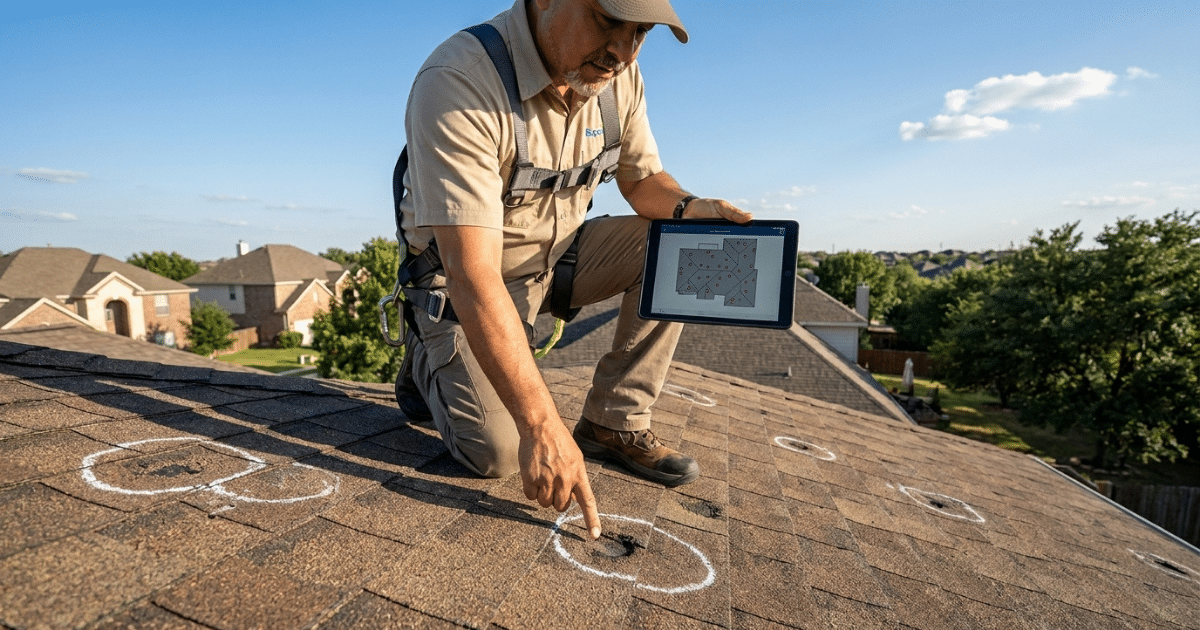
One of the most important steps after a storm is scheduling a professional roofing inspection.
An experienced roofing contractor can identify damage that homeowners may not recognize, including:
- Hail impacts
- Wind-lifted shingles
- Flashing failures
- Hidden roof leaks
- Compromised underlayment
- Structural concerns
A detailed inspection report, photographs, and repair recommendations can provide valuable documentation to support your insurance claim.
Avoid These Common Insurance Claim Mistakes
Many homeowners unintentionally make mistakes that complicate the claims process.
Avoid these common issues:
- Waiting too long to inspect the roof
- Throwing away damaged materials too soon
- Making permanent repairs before documentation
- Failing to photograph interior damage
- Forgetting to save receipts
- Assuming small damage is not worth inspecting
Acting promptly after a storm can help preserve important evidence and keep your claim moving forward.
What Happens After You File a Claim?
After your insurance company receives your claim, they will typically assign an adjuster to inspect your property.
During this process:
- The adjuster evaluates the damage.
- Documentation is reviewed.
- Repair or replacement estimates are prepared.
- Coverage is determined based on your policy.
Having your roofing contractor’s inspection report available during this process often helps ensure all storm-related damage is properly documented.
Why Local Experience Matters
Dallas homeowners face unique roofing challenges due to frequent hailstorms, high winds, and rapidly changing weather patterns.
Working with a local roofing contractor means partnering with professionals who understand:
- North Texas weather patterns
- Local building codes
- Common storm damage
- Insurance documentation requirements
- Proper roofing installation methods
Local experience helps streamline inspections, repairs, and communication throughout the restoration process.
Proudly Serving Dallas and Surrounding Communities
Superior One Roofing & Construction proudly provides storm damage roof repair and insurance claim assistance for homeowners throughout Dallas and neighboring North Texas communities. Our team serves Plano, Richardson, Garland, Irving, Grand Prairie, Mesquite, Carrollton, Farmers Branch, Addison, Coppell, Frisco, McKinney, Allen, Rowlett, Rockwall, Lewisville, The Colony, Highland Park, University Park, Duncanville, Cedar Hill, DeSoto, and surrounding areas.
Whether your home has suffered hail damage, wind damage, roof leaks, or other storm-related issues, we’re committed to providing dependable roofing solutions and expert guidance throughout the restoration process.
Frequently Asked Questions
How soon should I document storm damage?
As soon as it is safe to do so. Take photographs and videos before cleaning up debris or making permanent repairs whenever possible.
Should I make repairs before the insurance adjuster arrives?
Only temporary repairs that prevent additional damage should be completed before the inspection. Save receipts and photograph the damage before making any repairs. Permanent repairs should generally wait until the insurance company has documented the damage.
What if I don’t see visible roof damage?
Storm damage is not always obvious from the ground. A professional roof inspection can identify hidden damage that could eventually lead to leaks or structural problems.
Will hail always require a roof replacement?
Not necessarily. Some roofs only require localized repairs, while others sustain enough damage to justify replacement. A professional inspection and your insurance carrier’s evaluation will determine the appropriate solution.
Why should I work with a local Dallas roofing contractor?
A local contractor understands North Texas weather, common storm damage, local building codes, and the insurance claims process, making it easier to identify damage and complete quality repairs.
Schedule Your Free Storm Damage Roof Inspection
If you need storm damage roof repair in Dallas, Superior One Roofing & Construction is here to help.
Our experienced roofing professionals provide comprehensive storm damage inspections, detailed documentation, insurance claim support, roof repairs, and complete roof replacement for homeowners throughout Dallas and North Texas.
Contact Superior One Roofing & Construction today to schedule your free roof inspection and let our team help you restore your home with confidence.
